
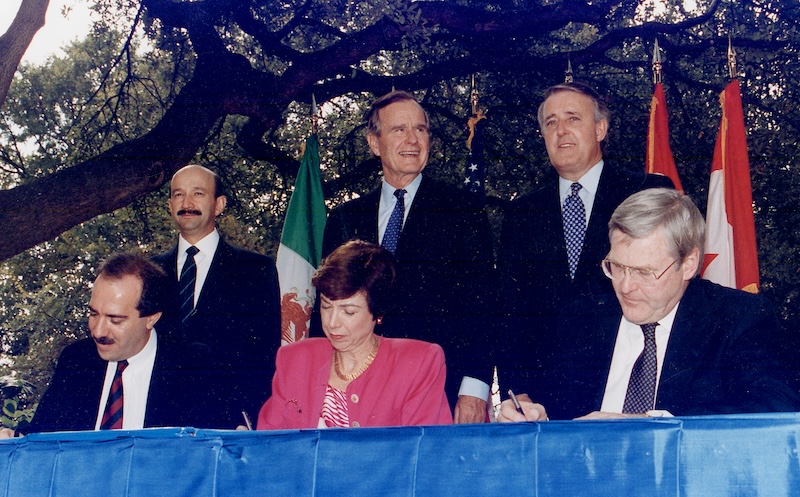
Originally published in The American Conservative.
The year 1994 marked the beginning of the era of globalization. For a short time after the end of the Cold War, it was unclear what would be the driving theme of the next period in history. Then it emerged: borderlessness. The theme of the new era would be the free movement of goods, people, and capital. In a few short months on either side of January 1, 1994, the European Union was formed; the Marrakesh agreement was signed, creating the World Trade Organization; the Channel Tunnel opened; and the North American Free Trade Agreement came into effect.
Hubris was present from the beginning. During the negotiations over NAFTA, union leader Richard Trumka, then of the United Mine Workers of America, later president of the AFL-CIO, asked a Clinton administration official whether he was worried about the effect of free trade on American blue-collar workers. The official said yes, but eventually “wages would start to go up again, and things would even out around the world.” Trumka asked him how long this would take. The official answered, “About three to five generations.”
 Helen Andrews